The Creatrepreneur Chronicles — by Kevin J. Barrett
April 30, 2026
First published on LinkedIn, April 30, 2026.
How Creatrepreneurs turn consulting friction into models, meaning, and momentum.
There is a moment in consulting when the visible problem is not the real problem. It may appear to be a website issue, a platform issue, a CRM issue, a marketing issue, a funnel issue, a partner tracking issue or a campaign issue. But underneath the tactical conversation, something deeper is usually happening.
The organization is trying to grow into a new stage of complexity, but the structure that got it this far may not be the structure that can carry it forward. That is where friction begins, and where the work becomes difficult for the consultant, advisor, coach or founder-minded contributor. You may see the pattern before the system is ready to name it. You may see that the issue is not effort, intelligence or commitment.
It is architecture.
The organization may be asking one system to do too many jobs. And when that happens, even a strong platform can become a bottleneck.
The platform was built for a purpose
A well-built platform is a powerful thing. It can create trust and deliver the core experience. It can hold user accounts, dashboards, data, workflows, permissions and serious application logic. It can represent months or years of disciplined product development, and become the backbone of the business.
That deserves respect. In fact, one of the first mistakes a consultant can make is failing to honor what has already been built. Founders, developers and product teams often carry scars that outsiders do not see. They have lived through tradeoffs, solved problems under pressure, and dealt with budgets, bugs, timelines and incomplete information.
So when a consultant arrives and says, “This platform should not be doing everything,” it can easily sound like criticism. That is not necessarily what is being said. A strong platform should be protected. The question is not whether the platform has value. The question is whether it is being asked to perform functions it was not designed to perform well.
That is a very different conversation.
When “one place for everything” becomes the trap
In growing ventures there is a natural desire to keep everything in one place: one platform, one website, one login, one dashboard, one team, one source of truth. That instinct is understandable. It feels efficient, organized and controlled. It feels safer than connecting different tools and systems together.
But growth often reveals what simplicity was hiding. The product platform needs stability; the marketing layer needs speed. The product platform needs controlled releases; the marketing layer needs rapid testing. The product platform serves people who already said yes; the marketing layer must speak to people who are still deciding whether they trust you.
The product platform delivers the promise. The marketing layer helps people understand why the promise matters.
Those are not the same job. And when one system is forced to carry both, the organization becomes slower, more rigid and less responsive to the market. That is how the platform becomes the bottleneck: not because the platform is bad, but because it is being overextended.
Product infrastructure and growth infrastructure are different
One of the most important distinctions a growing organization can make is between product infrastructure and growth infrastructure.
Product infrastructure is where the serious application logic belongs: the tools, dashboards, user accounts, protected experiences, core workflows and data that deliver the product promise. Growth infrastructure is different. It includes landing pages, lead magnets, campaigns, CRM workflows, content publishing, partner tracking, email nurture, segmentation, conversion testing, analytics and market feedback loops.
Both are essential, but they operate with different rhythms.
Product infrastructure asks:
- Is it stable and secure?
- Is the user experience reliable?
- Does it scale?
- Does it protect the integrity of the product and deliver the promised value?
Growth infrastructure asks:
- Is the message landing? Are people opting in?
- Which audience is responding, and which offer creates movement?
- Which partner source produces qualified leads?
- Which nurture path increases trust, and where are prospects dropping off?
- What can we test next?
The product side wants reliability. The growth side needs adaptability. Neither is superior; both are necessary. But when they are confused, the organization loses speed and clarity.
The consultant sees the drag before the team feels the cost
This is where consulting friction often begins. The consultant may recognize that the organization is treating a structural problem like a preference problem. The consultant may say, “This is not just about where the page lives, or which tool we use, or brand consistency. This is about how the business learns from the market.”
But inside the organization, it may still be heard as: “Why do you want another website? Another system? Why are you complicating this? Why are you not aligned with the platform?”
That gap is painful. The consultant is not necessarily trying to add complexity. The consultant may be trying to reduce hidden complexity by putting the right functions in the right places.
There is visible simplicity, and there is operational simplicity. Visible simplicity says, “Everything is in one place.” Operational simplicity says, “Each system does the job it is best designed to do, and the connections between them are clear.” Those are not always the same thing. Sometimes “everything in one place” creates the appearance of order while slowing down the very work that needs to move fastest.
Why marketing cannot always wait for product cycles
Marketing is not just promotion. Marketing is learning. It is the organization’s conversation with the market.
A landing page is not merely a page; it is a hypothesis. An assessment is not merely a form; it is a diagnostic tool. A lead magnet is a trust entry point. A nurture sequence is relationship development at scale. A CRM is memory, segmentation, timing and context. A campaign is a test of relevance.
The market is always speaking, so marketing systems must be able to adapt quickly. If every market-facing adjustment must move through the same process as core product development, the organization may lose the very learning it needs most.
This does not mean marketing should be careless, or the brand fragmented, or quality sacrificed. It means marketing needs an environment designed for testing, iteration and responsiveness. The product platform should not be weakened by trying to become that environment, and the marketing function should not be slowed by being forced to behave like a product release cycle.
The hybrid model is not a compromise
Some hear “hybrid” and think scattered, fragmented, uncontrolled, messy. But a mature hybrid model is not fragmentation. It is functional clarity.
Let the product platform do what it does best. Let the marketing layer, the CRM, the partner tracking and the content engine each do what they do best. Then connect them through clean strategy, clear messaging, disciplined data and shared accountability.
The goal is not to create competing worlds. The goal is to create an ecosystem.
That word matters. An ecosystem is not one thing pretending to be every other thing. It is a set of specialized parts that support the health of the whole. That is often how businesses grow: not by forcing every function into the same container, but by understanding which functions need to be integrated and which need to be differentiated. That is a leadership discipline.
The emotional layer: when architecture becomes personal
Here is where the consultant must be careful, because architecture conversations often become personal. A recommendation to separate product and marketing may be heard as criticism of the product. A different growth stack may be heard as a lack of confidence in the technical team. Faster landing-page iteration may be heard as impatience; a concern about conversion, as negativity.
This is where the consultant as Creatrepreneur must bring emotional discipline. Not every resistance is irrational. Sometimes people are protecting quality, brand integrity or limited resources. Sometimes they are protecting what they have worked hard to build. Sometimes they are simply operating from a different mental model.
So the consultant must learn to translate.
| Instead of saying | Say |
|---|---|
| “The platform should not do this.” | “The platform is valuable enough that we should not overload it with functions better handled by a growth layer.” |
| “We need another site.” | “We may need a market-facing environment designed for testing, CRM integration, partner tracking and rapid campaign learning.” |
| “This is slowing us down.” | “The current structure may be creating friction between product stability and marketing speed.” |
Language matters. Not because we are trying to soften the truth, but because truth has to be delivered in a form the system can receive.
When the room cannot yet hold the idea
Even when the consultant communicates well, the organization may not be ready. This is one of the hardest parts of advisory work. You can explain the model, show the pattern, draw the architecture, connect the dots and demonstrate the market logic. And still, the room may not hold the idea.
That does not always mean the idea is wrong. The timing may be wrong. The organization may lack the language, or the incentives may be misaligned, or trust may not yet run deep enough. The team may still be protecting the structure that got it this far. The pain of the current approach may not yet be visible enough.
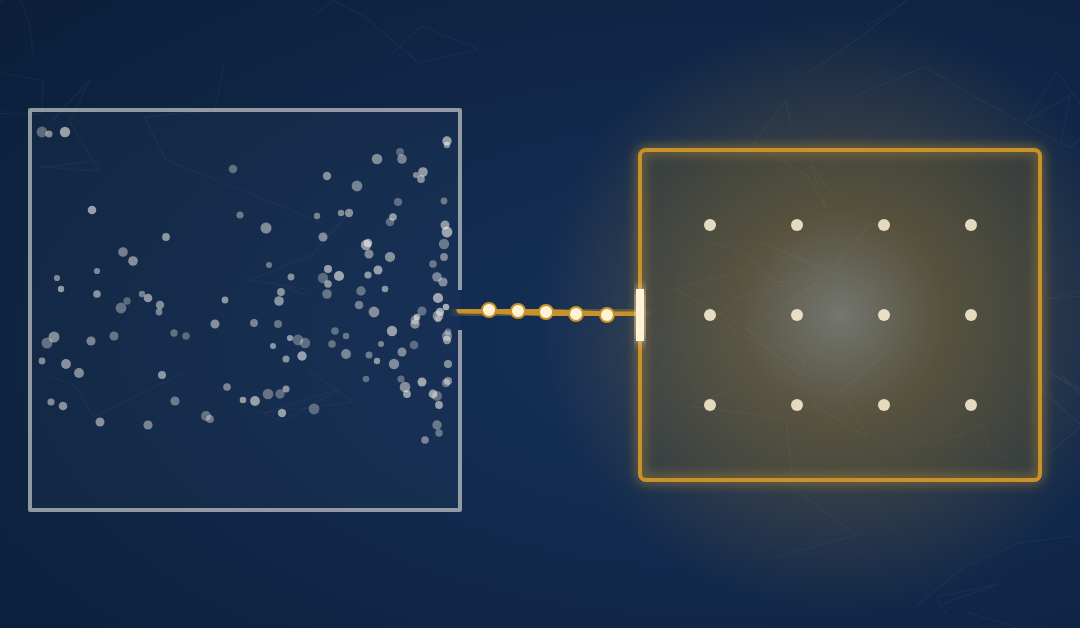
That is where the Creatrepreneur has to make a choice. Keep pushing? Withdraw? Become resentful? Or build the model?
The healthiest path is often to build the model. Not as rebellion, not as ego, not as a way of saying “I told you so,” but as a demonstration. A working example lowers abstraction. It turns debate into observation. It lets the market speak, and provides evidence without demanding agreement in advance.
Sometimes the model becomes the conversation the room could not yet have.
Turning friction into models, meaning and momentum
Friction by itself can become frustration. But friction with awareness becomes information. It tells us where the system is under strain, where language is unclear, where functions are being confused, and where a new model may be needed.
The Creatrepreneur does not waste friction. The Creatrepreneur asks: What is this resistance revealing? What deeper distinction has not been made? What model would make this easier to understand? What working example could reduce fear? What momentum can be created without needing to win the argument?
That is the shift.
A traditional response to friction is to push harder. A defeated response is to walk away. A Creatrepreneur response is to create: the model, the example, the language, the bridge. The next room.
For consultants, advisors and founder-minded builders
Many consultants know this place. You are brought in for your perspective, valued for thinking outside the box, until the box itself becomes the subject of the conversation.
That is the paradox. The consultant must respect the organization while still telling the truth. The Creatrepreneur must honor the work already done while pointing toward the next stage. The advisor must be firm enough to name the bottleneck and humble enough to know they cannot force the decision.
This is not easy work, but it is meaningful work. The point of consulting is not merely to provide answers. It is to increase the organization’s capacity to see, decide and act. Sometimes that happens through conversation, sometimes through documentation or disagreement, and sometimes through a working model built just far enough away from the bottleneck to reveal what is possible.
The practical lesson
When the platform becomes the bottleneck, do not begin by attacking the platform. Begin by clarifying the jobs.
First, name the job of each part: the product platform, the marketing layer, the CRM, partner tracking, content, analytics and nurture.
Then ask which jobs require:
- stability, security and technical control, with deep application logic;
- or speed, experimentation and marketing autonomy, with rapid message testing.
Once the jobs are clear, the architecture conversation becomes less emotional. The issue is no longer “Which platform do we like?” It becomes “Which structure gives the mission the best chance to work?”
That is a much better question.
Closing reflection
A platform can be excellent and still become a bottleneck. A team can be committed and still be operating from an incomplete model. A consultant can be right about the pattern and still need to change the way it is introduced. A founder can resist a recommendation and still be acting from care for the mission.
That is why this work requires more than expertise. It requires patience, communication, translation, emotional discipline, and sometimes the courage to build the working example.
Because when the room cannot yet hold the idea, the Creatrepreneur does not have to abandon the idea.
They can build the next room.
Not to win. Not to prove. But to serve. And if the model works, it creates something more powerful than an argument: evidence, learning, momentum.
That may be one of the quiet arts of consulting as a Creatrepreneur: to turn friction into form, resistance into reflection, and an impasse into a model. And to keep serving the mission, even when the mission must be shown a new way to see itself.
Part of the Arc: toward a change in the way we do business.
Ready to build with intention? Start here: thecreatrepreneur.com/start